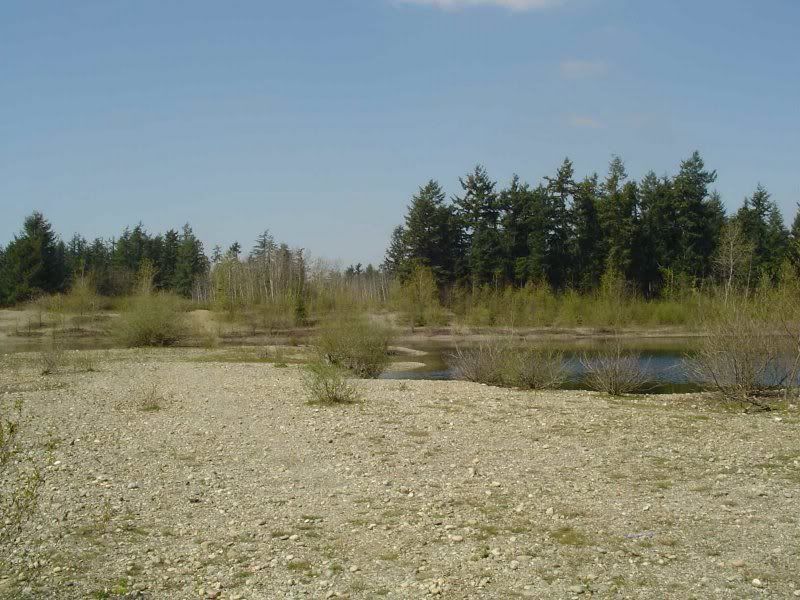
(Column orginally published in the Merritt Herald - Othmar Vohringer - The Outdoorsman)
© Othmar Vohringer
When we return from our trips in the wilderness we should make sure that we leave no trace of our visits behind. Yet it seems as the years pass I see more and more people leaving refuse in the bush. Sometimes it is just a few beverage cans but more and more often I am finding discarded tarps, tents a, bags of household garbage, motor oil canisters, broken buckets, roles of wire, plastic bags, ropes…the list of human civilization's waste could go on for the rest of this column.
Not only is it a criminal offense in the eyes of the law to pollute nature with garbage it is also a deadly hazard to wildlife. Many years ago when I lived in Illinois, USA, I was a volunteer for the Illinois DNR (Department of Natural Resources) and in this position I assisted in more wildlife rescues than I care to remember. Most times the rescues involved freeing the animal from some human caused predicament. Most vividly in my memory are two cases:
The first involved a deer that got its head stuck in a bucket. Nobody knew for how long the deer was in this pitiful state but judging by its haggard condition and the cuts and bruises on its legs it is very likely that the deer was staggering around blindly for several days, unable to eat or rest until it was reported. We had to tranquilize the deer obviously in order to cut the bucket away.
In the other case we spent over an hour freeing a whitetail deer buck that had somehow managed to tangle himself into a carelessly discarded rope. His front feet, head, neck and antlers were bound so tightly to the point that he was close to strangling himself. He too required tranquilization in order for us to remove the rope that had cut deeply into his flesh. There is no telling how many animals we could not get too in similar situations and because of that died a long and agonizing death.
Most wildlife are very curious animals that like to investigate and are often attracted by human garbage, especially if they smell something edible like a chocolate wrapper or a plastic bag that was used to take food into the camp. Items like this are often found carelessly thrown in the bush. Deer, moose, bears and other animals are attracted to plastic bags and wrappers and will eat them. Plastic is indigestible and will cause a blockage in the animals’ intestines which in turn kills the animal slowly over a period of days, suffering great agony.
Over the years I found that the worst days of nature pollution occur during long weekends holidays when everybody heads out in the wilderness to camp, hike, bike and fish. It puzzles my mind that outdoor visitors don’t mind carting all their supplies into the camp but are too lazy to bring the garbage back out again. If you can bring it with you then you can take it out again too. Nature is the home of the wild animals and it is our responsibility to make sure that their home remains free of civilisation’s refuse. This coming long weekend holiday, and of course at every other time too, be a conservationist and take your garbage, tents, tarps, glass bottles, drink cans and everything else you brought into the wilderness home and discard it in the proper manner.
Enjoy your outdoor activities to your hearts content but when you go home leave no trace behind of your visit so that others too can enjoy unspoiled nature and wildlife does not have to suffer because of irresponsible actions. If you witness environment pollution in progress make notes of the people involved, write down, or take a picture with your cellphone of the vehicle licence plate and call the RAPP-Line (Report All Poachers and Polluters) 1-877-952-RAPP (7277) Cellular Dial - #7277. Let’s all get a handle on trash dumping in our great outdoors.
Showing posts with label Environment. Show all posts
Saturday, September 06, 2014
Leave No Trace Behind
Thursday, March 20, 2014
Will the BC mountain caribou be extinct in our lifetime?
© By Othmar Vohringer
That might very well be the case if drastic conservation measures are not enacted quickly. The emphasis here is on “quickly”, which is a bit of an oxymoron in politics. The southern mountain caribou populations are in rapid decline despite an extensive provincial recovery plan. Why? The caribou recovery plan is complex and contains important short and long term measures that need to be addressed and implemented if we hope to save the mountain caribou herd.
There are many contributing factors to the steady decline of mountain caribou populations that need to be urgently addressed. Obvious factors are logging of old growth forests, mining and snowmobiling in sensitive caribou habitat. If that wasn’t enough, caribou herds face voracious predation by overpopulation of cougars and particularly wolves. This is a problem that can be fixed right now and with little expense to the taxpayers and would help the caribou enormously to sustain their numbers.
Even more simply and effectively is the government’s own wolf management plan which is essentially culling. Culling however, is controversial to many city people (potential voters) and therefor is not being fully implemented nor promoted.
The science is very clear on what needs to happen right now to save the mountain caribou. It takes time to regrow the forests and restore the habitat to the point where the caribou population can thrive and prosper. However, even these measures are of little use if the wolf and cougar population continues to grow with no controls. The latest survey, conducted by the Ministry of Forests, Lands, and Natural Resource Operations, suggests that only 1’5033 mountain caribou are left in BC. In 2007 the population count was 1’900, when the government announced a recovery goal to increase the herd to 2,500 by 2027. At the rate the caribou population loss occurs now there won’t be any caribou left within a few years from now.
Even the extensive captive caribou breeding program with animals transported from Alberta will fail if the wolves kill the caribou faster than they can be re-introduced back into the wild. A year ago, in addition to captive breeding, the government transplanted caribou from a “healthier” herd but that plan failed miserably: all the animals were killed by predators. The experts say that it would take approximately 20 years of intensive captive breeding and habitat restoration to bring our caribou herd back to its former glory but this is impossible as long as the wolf populations remain at such high numbers. Rather than trying to appease animal rights and anti-hunters, or worry about votes, it would be welcomed if the government would listen to wildlife experts and enforce the caribou recovery and wolf management plan. This not the time to worry about the opinions of the anti-wolf cull lobby and the misinformed. We need to implement the wolf management plan now or stand to lose the woodland caribou for ever.
That might very well be the case if drastic conservation measures are not enacted quickly. The emphasis here is on “quickly”, which is a bit of an oxymoron in politics. The southern mountain caribou populations are in rapid decline despite an extensive provincial recovery plan. Why? The caribou recovery plan is complex and contains important short and long term measures that need to be addressed and implemented if we hope to save the mountain caribou herd.
There are many contributing factors to the steady decline of mountain caribou populations that need to be urgently addressed. Obvious factors are logging of old growth forests, mining and snowmobiling in sensitive caribou habitat. If that wasn’t enough, caribou herds face voracious predation by overpopulation of cougars and particularly wolves. This is a problem that can be fixed right now and with little expense to the taxpayers and would help the caribou enormously to sustain their numbers.
Even more simply and effectively is the government’s own wolf management plan which is essentially culling. Culling however, is controversial to many city people (potential voters) and therefor is not being fully implemented nor promoted.
The science is very clear on what needs to happen right now to save the mountain caribou. It takes time to regrow the forests and restore the habitat to the point where the caribou population can thrive and prosper. However, even these measures are of little use if the wolf and cougar population continues to grow with no controls. The latest survey, conducted by the Ministry of Forests, Lands, and Natural Resource Operations, suggests that only 1’5033 mountain caribou are left in BC. In 2007 the population count was 1’900, when the government announced a recovery goal to increase the herd to 2,500 by 2027. At the rate the caribou population loss occurs now there won’t be any caribou left within a few years from now.
Even the extensive captive caribou breeding program with animals transported from Alberta will fail if the wolves kill the caribou faster than they can be re-introduced back into the wild. A year ago, in addition to captive breeding, the government transplanted caribou from a “healthier” herd but that plan failed miserably: all the animals were killed by predators. The experts say that it would take approximately 20 years of intensive captive breeding and habitat restoration to bring our caribou herd back to its former glory but this is impossible as long as the wolf populations remain at such high numbers. Rather than trying to appease animal rights and anti-hunters, or worry about votes, it would be welcomed if the government would listen to wildlife experts and enforce the caribou recovery and wolf management plan. This not the time to worry about the opinions of the anti-wolf cull lobby and the misinformed. We need to implement the wolf management plan now or stand to lose the woodland caribou for ever.
Labels:
Conservation,
Editorial,
Environment,
Outdoor Column
Tuesday, March 18, 2014
Are We Destroying Our Wildlife And Nature?
© Othmar Vohringer
How many of you can remember the time during the 1960’s when news from around the world of eagles and other birds of prey falling dead from the sky terrified us? After much research it was found that the then commonly used insecticide DDT (dichlorodiphenyltrichloroethane) was the culprit. The highly toxic insecticide was not only deadly to the insects but every other animal that ate insects, such as frogs, songbirds, fish and others. The birds of prey in turn ate the songbirds, frogs and fish. It was a deadly chain reaction all the way up the food chain. DDT also made its way into our food and scientists quickly found that DDT caused birth defects and cancer among other illnesses.
The outcome of the DDT aftermath research and how it affected nature, wildlife and humans caused an international outcry and started the “global environmental movement”. Eventually, after much political wrangling, DDT was internationally outlawed as an insecticide. Public opinion put a stop to the global poisoning, at least that is what we all thought.
Jumping forward from the 1960’s to 2013 and we are in a new crisis. Again we hear news from around the globe of fast declining honeybee populations and more recently of songbirds, frogs, salamanders and other small critters which at one time were plentiful but are now vanishing fast. Again the liberal use of pesticide is blamed for the decline of these animal populations. But what about larger animals such as our moose and mule deer populations right here in British Columbia? Are they affected too by the use of pesticides and other chemicals in the agriculture industry? Or are these animals the victim of the much hyped “global warming” effects? Not so if we are to go by what scientists say. We had global warming and global cooling before with little effect on wildlife. Animals, like humans, are very adaptable to climatic changes. What wildlife cannot adapt to is the poisoning of the food sources and the rapid loss of habitat. Both of these are plaguing our wildlife populations. DDT is outlawed but there are still tonnes of other equally deadly chemicals and poisons sprayed every day of the year all across the world, not to mention the genetically manipulated crop seeds killing every other plant growing nearby and insects eating from the plant.
Habitat loss occurs at a staggering pace. No matter how much we insist that we are environmentally conscious and how many laws and taxes we create in the name of “environmental consciousness”, when push comes to shove, we humans are not willing to forsake a new highway, shopping mall, golf course, housing projects and the extraction of renewable resources in the name of progress, prosperity and economic success. For as long as humans strive to make life easier with more gadgets and gizmos, bigger houses, easier access to shopping, more transportation networks and more use of renewable resources, wildlife always will be drawing the shorter straw. When wildlife and nature lose then so do humans and no matter how much we might believe ourselves to be above it all, we are an intricate part of nature and without it we’re as doomed as the honeybee. To think otherwise is simply foolish.
How many of you can remember the time during the 1960’s when news from around the world of eagles and other birds of prey falling dead from the sky terrified us? After much research it was found that the then commonly used insecticide DDT (dichlorodiphenyltrichloroethane) was the culprit. The highly toxic insecticide was not only deadly to the insects but every other animal that ate insects, such as frogs, songbirds, fish and others. The birds of prey in turn ate the songbirds, frogs and fish. It was a deadly chain reaction all the way up the food chain. DDT also made its way into our food and scientists quickly found that DDT caused birth defects and cancer among other illnesses.
The outcome of the DDT aftermath research and how it affected nature, wildlife and humans caused an international outcry and started the “global environmental movement”. Eventually, after much political wrangling, DDT was internationally outlawed as an insecticide. Public opinion put a stop to the global poisoning, at least that is what we all thought.
Jumping forward from the 1960’s to 2013 and we are in a new crisis. Again we hear news from around the globe of fast declining honeybee populations and more recently of songbirds, frogs, salamanders and other small critters which at one time were plentiful but are now vanishing fast. Again the liberal use of pesticide is blamed for the decline of these animal populations. But what about larger animals such as our moose and mule deer populations right here in British Columbia? Are they affected too by the use of pesticides and other chemicals in the agriculture industry? Or are these animals the victim of the much hyped “global warming” effects? Not so if we are to go by what scientists say. We had global warming and global cooling before with little effect on wildlife. Animals, like humans, are very adaptable to climatic changes. What wildlife cannot adapt to is the poisoning of the food sources and the rapid loss of habitat. Both of these are plaguing our wildlife populations. DDT is outlawed but there are still tonnes of other equally deadly chemicals and poisons sprayed every day of the year all across the world, not to mention the genetically manipulated crop seeds killing every other plant growing nearby and insects eating from the plant.
Habitat loss occurs at a staggering pace. No matter how much we insist that we are environmentally conscious and how many laws and taxes we create in the name of “environmental consciousness”, when push comes to shove, we humans are not willing to forsake a new highway, shopping mall, golf course, housing projects and the extraction of renewable resources in the name of progress, prosperity and economic success. For as long as humans strive to make life easier with more gadgets and gizmos, bigger houses, easier access to shopping, more transportation networks and more use of renewable resources, wildlife always will be drawing the shorter straw. When wildlife and nature lose then so do humans and no matter how much we might believe ourselves to be above it all, we are an intricate part of nature and without it we’re as doomed as the honeybee. To think otherwise is simply foolish.
Saturday, December 15, 2012
Local Anglers And Hunters Meet With NDP Leader Adrian Dix
(Previously published in the Merritt Herald - Othmar Vohringer, The Outdoorsman)
© By Othmar Vohringer
On Sunday, December 2, 2012, NDP leader Adrian Dix and Fraser-Nicola LMA Harry Lali hosted an election information event at the Tropico Spice restaurant in Merritt. Among the 100 plus people attending was a delegation of the Nicola Valley Fish & Game Club (NVF&GC). Harry Lali, who had attended a NVF&GC general meeting in early fall to discuss with us land access and confirming his political support, suggested that meeting Adrian Dix would be helpful to our cause. Rick McCowan, the land access committee chair of the NVF&GC had a chance to meet person to person with Mr. Dix before the event, providing him with the current information and a newly published information leaflet about land access problems here in the valley and across the province.
At the event Adrian Dix spent quite a bit of time at our table talking about the issues we presented to him and he seemed to be as concerned about land access as we are. A good sign!
Since I am not directly involved with the land access committee I must say that I am very impressed with what this small group of dedicated people in our club has achieved so far and all the hard work they put in to creating broad public awareness of the crown land access problem in our province.
While the BC Wildlife Federation, the province’s largest hunter and angler organization, is twiddling its thumbs on the issue our club has gathered immense momentum, attracting national media attention and support from many other organizations throughout our nation. The NVF&GC has without a doubt become the driving force of the land access campaign.
While our fathers and grandfathers could enjoy hunting and fishing without any concerns for the future, times have drastically changed since then. Today we have to become politically active in order to secure our heritage for future generations. Our outdoor sport heritage faces many challenges of which our forefathers wouldn’t dream of in their worst nightmares. Loosing access to public land is only one of these problems. Other problems are instigated from the myriad of popular self-proclaimed “animal welfare” organizations using vilification and misinformation targeted against hunters, and their recruitment of largely ignorant city/suburban peoples to their cause; particularly impressionable youth.
We need to challenge these problems as a united force in public, on the political stage and even in the courts or we stand to lose it all. I am proud to be a member of a small local organization that doesn’t just complain but is on the forefront of fighting for our future generations so they too can enjoy hunting, fishing and accessing lands, lakes and streams for generations to come. If you’re a concerned outdoor sportsperson and want to do your bit to preserve our heritage, rights and freedoms then you should be thinking about joining the Nicola valley Fish & Game Club.
Labels:
Animal Rights,
Conservation,
Editorial,
Environment,
Events,
News Release,
Opinion,
Outdoor Column,
People,
Politics
Monday, July 27, 2009
Where there is smoke there is fire
© Othmar Vohringer
When I walked the dog this morning I noticed that the valley of Merritt is covered in what appeared to be haze. Would I have not watched the news I probably wouldn’t have paid much attention to it. The haze is smoke from the many small to large forest fires raging around Merritt.
For the past few months we have had exceptionally hot and dry weather with temperatures between 36 to 45 Celsius degrees (96 F to 113 F). The forests and fields are tinder dry. All it needs is a spark to ignite the landscape. The mountain pine beetle infestation British Columbia has experienced over the last few years has added to the problem as large tracts of forests consist of dead and dying pine trees.
At the beginning of last week the city of Kelowna, close to Merritt, had to be evacuated as a violent forest fire engulfing 300 hectares threatened to burn the city to the ground. Over 200 firefighters from around the province battled the blaze from the air and ground for almost over a week to control the fire.
A welcome heavy rainstorm on the weekend finally brought some much hopped for relive to Kelowna but fears to other regions. The lightening has caused more forest fires to the north, east and west of Merritt. The air is busy with airplanes and helicopters flying back and forth trying to be everywhere at the same time and keeping the fires under control.
So far Merritt is save. But one has to ask for how long? On the walk with my dog this morning a truck passed us by and the driver flicked a burning cigarette stump out of the window into a dry meadow. I run to it to stomp it out. This one little stump would have been all that was needed to start a fire. The constant wind would soon turn that burning cigarette stump into a large fire. Is it really possible that people have so little commonsense?
If you live in a dry and hot area follow these tips to prevent forest and grassland fires.
Obey all local regulations posted regarding open fires.
Do not leave easily combustible items such as gasoline and propane gas tanks exposed to direct sunlight for extended times.
Never discharge a still lit cigarette in the open. That’s what ashtrays are for. Make sure the cigarette is completely butted out.
After you finished barbequing extinguish the hot coal with a bucket of water. Make absolutely sure that there are no embers left burning.
Do not make campfires in nature as embers could be carried away by the wind. That is how the Kelowna forest fire got started that destroyed 300 hectares and nine houses.
If you camp outside always have water or better yet a fire extinguisher within reach of where you’re cooking.
When I walked the dog this morning I noticed that the valley of Merritt is covered in what appeared to be haze. Would I have not watched the news I probably wouldn’t have paid much attention to it. The haze is smoke from the many small to large forest fires raging around Merritt.For the past few months we have had exceptionally hot and dry weather with temperatures between 36 to 45 Celsius degrees (96 F to 113 F). The forests and fields are tinder dry. All it needs is a spark to ignite the landscape. The mountain pine beetle infestation British Columbia has experienced over the last few years has added to the problem as large tracts of forests consist of dead and dying pine trees.
At the beginning of last week the city of Kelowna, close to Merritt, had to be evacuated as a violent forest fire engulfing 300 hectares threatened to burn the city to the ground. Over 200 firefighters from around the province battled the blaze from the air and ground for almost over a week to control the fire.
A welcome heavy rainstorm on the weekend finally brought some much hopped for relive to Kelowna but fears to other regions. The lightening has caused more forest fires to the north, east and west of Merritt. The air is busy with airplanes and helicopters flying back and forth trying to be everywhere at the same time and keeping the fires under control.
So far Merritt is save. But one has to ask for how long? On the walk with my dog this morning a truck passed us by and the driver flicked a burning cigarette stump out of the window into a dry meadow. I run to it to stomp it out. This one little stump would have been all that was needed to start a fire. The constant wind would soon turn that burning cigarette stump into a large fire. Is it really possible that people have so little commonsense?
If you live in a dry and hot area follow these tips to prevent forest and grassland fires.
Obey all local regulations posted regarding open fires.
Do not leave easily combustible items such as gasoline and propane gas tanks exposed to direct sunlight for extended times.
Never discharge a still lit cigarette in the open. That’s what ashtrays are for. Make sure the cigarette is completely butted out.
After you finished barbequing extinguish the hot coal with a bucket of water. Make absolutely sure that there are no embers left burning.
Do not make campfires in nature as embers could be carried away by the wind. That is how the Kelowna forest fire got started that destroyed 300 hectares and nine houses.
If you camp outside always have water or better yet a fire extinguisher within reach of where you’re cooking.
Wednesday, January 30, 2008
In The Name Of Progress
© By Othmar Vohringer
On the Backwoods Drifter blog I read about Denny’s one-man battle against mountaintop removal. He has dedicated many posts to the destruction of America’s mountaintops through surface coal mining.
According to the 700 Mountains.org
Sometimes we forget, or shall I say overlook, the fact that hunters and fishers are also stewards of our natural resources and environment. To be a steward should include not only concerns about hunting and fishing but also the destruction of nature in the name of progress. The destruction of nature adversely affects our hunting and fishing opportunities, wildlife, environment, our health and quality of life .
Daily hundreds of thousand of acres of pristine nature disappear forever to make room for housing development, shopping malls, mining and other so called progress. Sadly, more often than not building and industry development happens without a shred of concern for environmental and wildlife concerns.
Just one such example became very obvious a few years ago in our former hometown where a once diverse natural habitat consisting of forests, streams and small farm holding was completely destroyed within four years. Thousands of acres where once wildlife and small farms coexisted in a healthy natural balance and that was home to some of the endangered raptors such as the Bald Eagle, Spotted Owl were bulldozed to make room for thousands of compact living townhouses.
Here is what our neighborhood looked like before the bulldozers moved in. A landscape with meadows, woodlots, ponds and streams that has been...

...turned into this!

This is what it looks like today after the town granted developers permission to build over 5000 compact townhouses. Compact means no green spaces, no playgrounds, nothing just house, after house, after house for miles. What once was a peaceful area is now rated the area with the highest criminal activity in the township.
It is also an area of an environmental hazard waiting to happen. Flooding after heavy rains, which are very common here in BC, is already happening. Earth slides on the hills that could take down houses with them are predicted for the future after a few minor slides occurred this past year.
When this developing craze went on I watched in disgust as a pristine natural environment disappeared literally under my feet but I didn’t do anything about it. When I witnessed displaced wildlife running around on the highway and the loss of quality living in our neighborhood combined with the daily howling of police sirens it was too late to do something about it.
While we can’t stop progress we should do all we can to make our voices heard and demand that in any industrial and developing activity environmental concerns have to be addressed and solved before it is to late. With that said I hope that you will take the time and support Denny at Backwoods Drifter in his one-man battle against mountaintop removal.
Environment,Mountaintop Removal, Backwoods Drifter, Appalachia
On the Backwoods Drifter blog I read about Denny’s one-man battle against mountaintop removal. He has dedicated many posts to the destruction of America’s mountaintops through surface coal mining.
According to the 700 Mountains.org
“Mountain top removal (MTR) coal mining already has devastated hundreds of mountains and surrounding areas in America - destroying the landscape, poisoning streams and rivers, crushing entire ecosystems and making life a living hell for nearby communities.”Denny’s blog has a respectable list of blogs and websites that oppose mountain top removal, in his post Blogging for Appalachia he asks for additional support from us the outdoor bloggers.
Sometimes we forget, or shall I say overlook, the fact that hunters and fishers are also stewards of our natural resources and environment. To be a steward should include not only concerns about hunting and fishing but also the destruction of nature in the name of progress. The destruction of nature adversely affects our hunting and fishing opportunities, wildlife, environment, our health and quality of life .
Daily hundreds of thousand of acres of pristine nature disappear forever to make room for housing development, shopping malls, mining and other so called progress. Sadly, more often than not building and industry development happens without a shred of concern for environmental and wildlife concerns.
Just one such example became very obvious a few years ago in our former hometown where a once diverse natural habitat consisting of forests, streams and small farm holding was completely destroyed within four years. Thousands of acres where once wildlife and small farms coexisted in a healthy natural balance and that was home to some of the endangered raptors such as the Bald Eagle, Spotted Owl were bulldozed to make room for thousands of compact living townhouses.
Here is what our neighborhood looked like before the bulldozers moved in. A landscape with meadows, woodlots, ponds and streams that has been...
...turned into this!
This is what it looks like today after the town granted developers permission to build over 5000 compact townhouses. Compact means no green spaces, no playgrounds, nothing just house, after house, after house for miles. What once was a peaceful area is now rated the area with the highest criminal activity in the township.
It is also an area of an environmental hazard waiting to happen. Flooding after heavy rains, which are very common here in BC, is already happening. Earth slides on the hills that could take down houses with them are predicted for the future after a few minor slides occurred this past year.
When this developing craze went on I watched in disgust as a pristine natural environment disappeared literally under my feet but I didn’t do anything about it. When I witnessed displaced wildlife running around on the highway and the loss of quality living in our neighborhood combined with the daily howling of police sirens it was too late to do something about it.
While we can’t stop progress we should do all we can to make our voices heard and demand that in any industrial and developing activity environmental concerns have to be addressed and solved before it is to late. With that said I hope that you will take the time and support Denny at Backwoods Drifter in his one-man battle against mountaintop removal.
Environment,Mountaintop Removal, Backwoods Drifter, Appalachia
Monday, February 19, 2007
Albino Moose?
Rex Howell from Deer Camp Blog sent me an email with a link to World of Whitetail where he found some interesting pictures of “albino” moose. I am always interested in freaks of nature and so I had not to be asked twice to visit that website. There where seven pictures showing not albinos but white moose and a couple of pictures showing piebald moose.

White animals are not that uncommon in nature, but not all white colored animals are albinos. Albinism is due to one of several gene mutations that affect the production of normal pigmentation. True albinos, or amelanistic, animals lack melanin and are white with no markings and with unpigmented pink eyes. In other words, albinos have the genes responsible for giving color pigmentation missing.

White animals – non-albinos: Leucism is similar to albinism and is often mistaken for albinism; leucistic animals are white with dark eyes and some pigmentation, for example ghost markings. White deer are often mistaken for albinos, but are caused by a different mutation called chinchilla, which affects the distribution of pigment on the hair shaft.

A piebald deer is like the white non-albino but with leucism defects, meaning that not all pigment cells are affected by leucism, resulting in a white base color with splotches of natural coloring. Piebald animals are more common than white colored animals and these are more common than the pure albino. True albinos are very rare and seldom grow to full adulthood.

Tags: White Deer, Albino, Piebald Deer, Moose, Mutations, Wildlife
White animals are not that uncommon in nature, but not all white colored animals are albinos. Albinism is due to one of several gene mutations that affect the production of normal pigmentation. True albinos, or amelanistic, animals lack melanin and are white with no markings and with unpigmented pink eyes. In other words, albinos have the genes responsible for giving color pigmentation missing.
White animals – non-albinos: Leucism is similar to albinism and is often mistaken for albinism; leucistic animals are white with dark eyes and some pigmentation, for example ghost markings. White deer are often mistaken for albinos, but are caused by a different mutation called chinchilla, which affects the distribution of pigment on the hair shaft.
A piebald deer is like the white non-albino but with leucism defects, meaning that not all pigment cells are affected by leucism, resulting in a white base color with splotches of natural coloring. Piebald animals are more common than white colored animals and these are more common than the pure albino. True albinos are very rare and seldom grow to full adulthood.
Tags: White Deer, Albino, Piebald Deer, Moose, Mutations, Wildlife
Subscribe to:
Posts (Atom)