Showing posts with label Turkey Hunting. Show all posts

Sunday, March 16, 2014

Boots That Are Made For Mucky Weather

© By Othmar Vohringer

Turkey hunting season, especially the early part, is notorious for constantly changing weather conditions, rain, snow and cold temperatures mixed with warm and sunny days are not uncommon. Quit often weather conditions can change during a single day from nice spring to cold winter conditions.

Because of that the avid turkey hunter has to be prepared for everything mother nature can dish out. For me this means, among other things, having a good pair of boots that can put up with the worst weather and still provide protection and comfort.

Is there such a thing? Yes there is! A year ago I purchased a pair of Muck boots and have grown so fond of them that I now own several pairs. I use to hate putting on rubber boots in wet weather because they made my feet sweat and cold. Another problem I encountered with rubber boots was that either they provided no ankle support or they when they did they were so tight that you needed Vaseline to in and out of them.

Muck boots are a very different story. These boots are made of Neoprene, of various thicknesses depending on the model, this fabric has a natural stretch that permits easy on and off despite the snug fit around the ankle. Neoprene also makes the boot much lighter than its rubber relative which in turn makes for less tiresome walking. This is especially important for turkey hunters as a lot of the hunting success depends on walking quickly from one to the next setup. For me a big plus of the Muck Boots is the fact that they a 100% waterproof and yet still breathable, which means, no more sweaty feet. Depending on the model the boots come insulated to keep your feet warm from departures as low as minus 60 degrees. While several features in the foot part of the boot make sure that your feet are comfortable. The aggressive sole of the boots lets you walk on just about any surface from a frozen lake to swamp without worries of losing traction.

Here I introduce you to the two models that I might use on any of my turkey hunts.

In cold weather with snow still on the ground, which happens often around here in early spring, I chose to wear Artic-Pro Muck boots (the brown pair in the image)
  • Fully insulated with 8mm Neoprene. This provides the optimal warmth, comfort, and waterproofing that you expect from a Muck Boot.
  • A fleece liner is added to keep your feet warm in down to -60 degrees
  • We wanted to make sure your feet were warm so we added an extra 2mm of thermal foam in the foot area.
  • The stretch-fit topline binding is snug around the calf to keep warm air in and cold air out
  • The seamless construction allows for easy cleaning with the simple spray of the hose
  • Double reinforcement in the instep, heel and achilles area where you need it most.
  • EVA midsole cushions with every step
  • Our specially designed Bob-Tracker outsole is molded to be rugged, aggressive and durable.
In warmer but wet weather I might wear my all-purpose knee high boots the Elite Stealth Muck Boots (camouflaged boots in the image)
  • Anti-microbial treatment prevents growth of odor causing bacteria
  • Inscentible® scent masking for improved concealment when hunting
  • 5mm NEOPRENE bootie with four-way stretch nylon, 100% waterproof, lightweight and flexible
  • Fleece lined
  • Additional Achilles overlay for added protection
  • 2mm thermal foam underlay added to the instep area for additional warmth
  • EVA molded midsole with contoured footbed
  • Reinforced toe
  • MS-1 molded outsole is rugged, aggressive and durable for maximum protection and stability.

To find out more about Muck Boots visit their website.

Tuesday, April 24, 2012

In Search Of Wild Turkey

(Originally published in the Merritt News – Othmar Vohringer The Outdoorsman)

© By Othmar Vohringer

On Monday morning at1:00 a.m. the alarm went off and an hour later I was on my way towards Kelowna to meet up with my good friend Rick. The sparkling stars in the sky promised a beautiful sunny day. “The perfect weather for turkey hunting” I thought as I drove along highway 79 in anticipation of hunting my favourite game birds.

At 4:00 a.m. I pulled into Kelowna and shortly afterwards Rick arrived too. I loaded everything into his truck and off we went toward Beaverdell. During the drive Rick kept telling me about his past turkey hunting successes in that region, which, he said, “is loaded with turkeys”. I had no reason to doubt him. Rick is an accomplished turkey hunter. We arrived at our first hunting spot right at dawn. It’s the perfect time to locate a male turkey. This is accomplished by using a raven or crow call, a few loud “caw-caw-caw” calls makes the toms gobble. In fact any sudden loud sound makes a male turkey respond with a thunderous gobble that can be heard from a far distance away. Once a tom is heard the hunter tries to get as close as possible without alerting the bird and then by using female turkey calls to “love talk” with the hopes of luring the tom to within shooting range. 

Thursday, March 22, 2012

Spring is the air

© By Othmar Vohringer
(Originally published in the Merritt News: "Othmar Vohringer - The Outdoorsman")

March and April are for several reasons great times for me. The first is knowing that the winter soon will be over. Although having grown up in cold, snowy Switzerland I never liked it and I still don’t. As a hunter it also means that the spring hunting season is soon upon us.

March and April are also the two months where I do quite a bit of travelling to various hunting sports events with my seminars. The “seminar tour” kicks off with the BC Boat & Sportsmen’s show in Abbotsford, which is BC’s largest hunting and fishing sport show. It is at such events where I meet fellow outdoor enthusiasts from all walks of life and regardless of social backgrounds they’re like one big family sharing a common bond between each other that is not encumbered by state borders, language, race, age or gender.

Wednesday, April 27, 2011

Everything About Turkey Hunting

© By Othmar Vohringer

From the blog statistics I can see that many readers come to this blog looking for turkey hunting information. Although, Outdoors With Othmar Vohringer offers some information on turkey hunting there is a much better source available where turkey hunters of all skill levels can find information. Wild Turkey Fever, a sister blog of Outdoors with Othmar Vohringer, is dedicated to turkey hunting and provides practical and comprehensive information on all aspects of turkey hunting.

Here are a few highlights of the latest information posted on Wild turkey Fever.

As mentioned this is just a small sample of the information available on Wild Turkey Fever. There is a lot more available and I can say without brag that over the years Wild Turkey Fever has become the Internet go-to-source for over a million avid turkey hunters.

###

This blog post has been brought to you by Othmar Vohringer Outdoors

Sunday, June 01, 2008

Turkey Hunting Contest Winner.

© By Othmar Vohringer

On the Wild Turkey Fever blog we had a contest and yesterday (closing date) a nifty little computer program has chosen the winner.

I am glad that I didn’t have to choose a contest winner. I would have had a real hard time to pick one. All the entries where great to read, each of the contestants told a personal turkey hunting story to which I could relate too from my own hunting adventures.

I would like to take this opportunity to thank everybody that took part in the contest I enjoyed reading them. Congratulations to the winner of the Heirloom Double Barrel turkey call. I know from field tests that this call will be of great help in bringing that big tome within shooting range of her gun.

The contest winner story is of a husband convincing his lovely wife to go turkey hunting with him. The day they went it rained hard and then a few other things happened that almost spoiled the hunt, but the husband was determined to find a gobbler for his wife to shoot. …Well why don’t you go and read the story of Sandy’s Rainy Day Gobbler. While you are at Wild Turkey Fever perhaps you feel like stopping in and congratulate Sandy too, I am sure she appreciates it very much.


Tags: , ,

Sunday, May 18, 2008

2008 Spring Turkey Hunting Contest


© By Othmar Vohringer

On the Wild Turkey Fever blog we hold a contest of the best 2008 spring turkey hunt. Readers can send me a picture and a short story of a turkey hunt from this years spring turkey hunting season.

At the end of the contest I will, or rather my computer, will choose one entry as winner. The winner will receive a Heirloom Double Barrel call from my own stock.

Anybody wanting to enter the fun contest has to do so until May 31st.

To view the first entries visit Wild Turkey Fever.

To submit your contribution and learn more about the contest rules click on the image below.
Hurry up Contes ends May 31st.


Tags: , ,

Wednesday, April 04, 2007

Turkeys looking for love in all the wrong places

Today I found this article in the News and Tribune and thought that this would be very fitting, considering that I have written in the past days a fair bit about turkeys and turkey hunting.

Enjoy!

Turkeys looking for love in all the wrong places

Sure, eating turkey will make you sleepy, but seeing one should make you act crazy.
The colorful wild fowl on your lawn, front step or automobile might seem like a welcome distraction, but the feathered visitors have actually become something of a nuisance and, in some cases, a threat to North Shore homeowners, according to Massachusetts wildlife experts.

That’s because turkeys are especially aggressive this month as hormones drive them to seek a mate. However, as those who’ve endured a menacing, late-night subway wait, it pays to act a little crazy.

“Be a raving maniac out there,” advises Marion Larson, information and education biologist with MassWildlife. “(Turkeys) should run or fly off. I was doing it a few times this winter. I want them to be aware of me and other people.”

Turkeys will show their aggressive side this time of year and try to exert their dominance over other turkeys — real ones as well as their own reflection.

But animal lovers beware: playing nice and feeding turkeys could make turkeys think you are ... well, a turkey.

“It’s great to watch turkeys, it’s fun to see them, but our behavior will also influence their behavior,” Larson said. “If they don’t see people as a threat, (turkeys) could switch to thinking people are turkeys and they will run after people and peck at people. They need to put you in the pecking order, too. It happens every year.”

Marblehead police said they’ve responded to a number of calls from residents trapped inside their cars.

“Love is in the air,” quipped Detective Sgt. Marion Keating, “so we’ve been chasing turkeys all week.”

Marblehead police had two turkey calls Sunday — a Victoria Lane resident reported a wild turkey roaming the property, and a resident on Leggs Hill Road reported one blocking the driveway.

Keating said it is common for police departments to receive calls in March and April about turkeys either roaming on the property or “trapping” motorists in their car.
Should you become similarly detained in your car by a big bird pecking at its reflection, Larson says not to panic. Instead, even when there’s no rain in the forecast, keep an umbrella handy. When you open the car door, start unfurling and closing the umbrella repeatedly.

“Like the Penguin in Batman,” Larson said.
Don’t have an umbrella? Take a jacket and start flapping it around.
“You have to be aggressive and persistent,” Larson added.

Read more>

Tuesday, April 03, 2007

Turkey Calling made easy

By far the most frequent question I get asked about turkey hunting is “What type of calls should I use?” which is usually followed by “What are the best calls to lure a tom to me?”

Lets start with the type of calls. In my personal opinion friction calls, such as the slate and the box call are by far the best calls to use for several reasons. A friction call is easy to learn. Any hunter, even a novice or a child, will be able to produce a decent turkey sound on a box call or slate call within minutes. Friction calls, and that is strictly my opinion, sound more natural than mouth diaphragm calls. Also, many hunters – myself included - just can’t handle a mouth diaphragm call. The moment I put one of these calls in my mouth I get terrible gag reflexes causing me to cough. Mouth diaphragm calls also have a very steep learning curve. There is no such thing as putting one of these latex pieces in your mouth and sounding right away like a turkey. Oh, no. You will have to learn how to blow the air through the call for weeks or even for months until you can produce a decent sound.

Having said all that against the mouth diaphragm call, there are significant advantages in using one. The biggest of these advantages is being able to operate a mouth call with no hand movements, which is necessary to avoid being detected by an eagle-eyed tom looking for that lovesick hen. Since I can’t use a mouth call for close-in work for reasons stated earlier, I use the next best thing to a mouth call, which is the push, and pull friction call. With my gun mounted I rest the barrel on the call and if I need for the tom to take one or two more steps I just push the peg on the call with my forefinger to produce a gentle purr. In 90% of the cases this simple purr will do the trick, while the movement of my finger is obstructed from the toms view by the shotgun barrel.

This brings me to the turkey calls that I think work best on toms. I am sure most of you have been to a turkey hunting seminar or a turkey calling contest or at least have seen a turkey hunting video. The calling produced in these venues is simply amazing and a good source to hear the different sounds turkeys make and what it should sound like when these calls are properly reproduced. But don’t be fooled that this is actually how you call to a tom in the real hunting scenario. In a turkey calling contest the caller does not try to impress a big old tom, he has to impress the contest judges and the audience. In other words the contestant puts on a show. Seminars and hunting videos are aimed at the hunters as potential customer. It’s a sales pitch. Not that there is anything wrong with that.

I have observed turkeys for many years. In these observations I have found that turkeys keep their communication really simple. Most hens don’t talk much at all. Especially in places that see a lot of hunters and where turkeys have become smart over the years. What I use are yelps, clucks with the odd cackle mixed in but mostly I use soft purrs. Remember, a turkey hen tries to attract the attention of a tom telling him; “Here I am come to me I need some love”. She is not chattering to her neighbor across the fence and she is not in an aggressive mood. To begin my calling session I usually start with a short series of yelps at different pitches just to figure out what the resident toms like to hear. Once I get a response from him I keep the yelping at that pitch. To make it more interesting for the tom I add some clucks and when he comes closer I add lots of soft purrs.

It’s a good tactic to stop calling for a while as the tom comes closer. This gives him the impression that the hen perhaps has lost interest and this in turn makes him move faster toward the hen. Another good tactic, especially when the tom is in the company of hens is to duplicate the exact sound the hen makes. If the hen yelps then I yelp too in the exact pitch and duration, if she clucks so do I. What this does is to annoy the turkey hen. She will come to check out what other hen dares to mimic her. As she comes to you so does her companion the tom. Sometimes a tom hangs up and no amount of calling you do will bring him any closer. In this situation I keep quiet but the moment he wants to walk away I purr at him. This often does the trick to bring him closer. This tug of war can go on for some time until the tom can’t stand it anymore and curiosity gets the better of him.

If you only learn how to yelp, cluck and purr you have all the sounds that are needed to be a successful turkey caller. Above all make your calls sound natural. With that I mean try to put some emotion in your calling. Not so long ago I listened to a hunter producing a monotonous series of yelps. That is not how a real turkey sounds like. Turkeys move around, turning their heads from left to right as they look for an approaching tom. The sounds shift around fading in and out, which can be easily duplicated by moving the call to either side or behind you. At the same time gently shuffle the ground a bit with your feet to mimic a turkey scratching the leaves. Instead of the monotonous yelp – yelp try to change the cadence and pitch of the calling. In other words give your calling some live.

Observe wild turkeys on your pre-season scouting trips and watch how they behave and what vocalizations they use and how they sound. You will soon find out that turkey calling is not a science and you do not have to be a master-turkey-caller. Get out in the woods and have some fun hunting and calling big toms.


Tags: , , , , , , , , , , , , , ,

Sunday, April 01, 2007

Turkey Hunting Tips

Matt Coughlin, author of Bright Idea Outdoors Weblog has been kind enough to link to my article Turkey Calls. He writes:

“I am resolved to squeeze in at least a couple solid turkey hunts this year.
So I was delighted when I found a mini-clinic on turkey calling on Othmar's blog this morning.”


This gave me the idea to make a little on-line-turkey-hunting-clinic here at Outdoors with Othmar Vohringer. Starting with the article Turkey Calling. The coming few days I will post a variety of articles on this blog with helpful tips, tricks and advice for tukey hunters of all skill levels.

Turkey Hunting Tips

Soft Call First:
Don’t start out with aggressive calling first thing when calling to a gobbler. Start off with soft clucks and purrs. If that doesn’t seem to work, go into some medium volume yelps. If that still doesn’t get him, try some cutting and aggressive yelping. If you call to much and too loud to start with, you might run your gobbler off, and the game is over. If you start soft, you can always work your way into the more aggressive calls.

Scouting:
This is the one thing that can make more of a difference than anything. If you know where a gobbler goes on his daily routine, you are way ahead. Simply get to a favored strut or feeding area before the gobbler does, and call softly. If he is coming there anyway, you will have no problem. Remember, it is easy to call a gobbler to somewhere he already wants to go.

Know Your Gun and Ammo:
Go to the pattern board and find a gun, choke and load that shoot well. Know the distance where your gun’s performance tapers off, and never shoot past it. We have an obligation to do everything within our power to make clean harvests on wild turkeys. A good pattern should be at 85-95% in a 30” circle at 40 yards.

Learn to Use Different Calls:
The more different calls and types of calls you can use, the better you will be in the turkey woods. Some days gobblers will answer a diaphragm, and the next day they will only answer a tube call. On windy days, box calls and aluminum calls cut through the wind. Also if you can use a variety of calls, you can use something different and won’t sound like everyone else hunting in your area.

Hunt During the Rain:
Turkeys have to live in the rain. Modify your tactics and hunt open fields and pastures where turkeys feel comfortable since they can depend on their eyesight instead of hearing. Portable waterproof blinds are great during the rain. You can stay dry, and wait the turkeys out.

Camo Yourself Completely:
Head to toe camo is a must when hunting sharp-eyed gobblers. Gloves, face mask and even camoed guns are helpful. Keep movement to a minimum and try to blend in to the natural surroundings. Use a good camouflage pattern such as ASAT or Predator.

Get as Close as Possible:
Sneak in as close as possible to start calling to a gobbler. If you can get in his comfort zone (75-100 yards) before you make your first call, he will probably come in. Use terrain features to help get close, but don’t crowd a bird and bump him. If you go one step too close, the game is over.

Use the Buddy System:
Hunt in teams, and let one hunter call and one shoot. The caller sits 40-70 yards behind the shooter. In this scenario the gobbler is concentrating on the caller’s position, and the pressure is taken off the shooter. Also, if a bird hangs up 60-70 yards from the calling, he will still be in easy gun range for the shooter.

Use Locator Calls:
When possible get a turkey to gobble to shock calls like crow or owl calls. You can keep up with the bird’s location without giving away your position with a hen call. When moving in on a gobbler, you don’t have to worry about him coming to your calling at the same time if you are using locator calls.

When All Else Fails, Mock a Fight:
If you have tried every tactic you know, and a gobbler is still hung up out of range, mock a turkey fight as a last ditch effort. You can use two push button calls, a slate call, a diaphragm, or a combination of any of these to make the “fighting purrs” sounds that gobblers make when they fight. If he gobbles to this tactic, get ready. Gobblers usually come in to this tactic very fast or not at all.

Be Patient:
Patience, Patience, Patience - Probably the most overlooked skill in turkey hunting is the ability to sit still and wait out a gobbler. When you can't stand sitting anymore and you think it's time to get up and move to another hunting spot, stay put for fifteen more minutes. Patience kills more gobblers than any other factor.

-------------------------------------
To inquire or book a turkey calling seminar, or any of our other seminar topics, please Email me for more information and dates availability.

Tags: , , , , , ,

Friday, March 30, 2007

Turkey Calls

With the turkey hunting seasons opening in a few weeks all over North America my email box is steadily filling up with requests for turkey calling tactics and what sounds turkeys make. So here is part one of a long answer. Part two of the answer (Turkey calling made easy) will be posted later.
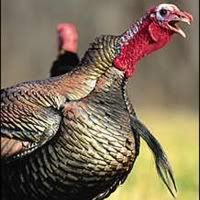
Turkeys are, like most birds, very vocal creatures. Like humans use their language to communicate with each other so do turkeys. They make a variety of sounds to relate messages to each other or “show” emotions. A smart turkey hunter knows what these sounds are and their meaning.

To become a successful turkey hunter it is imperative to learn how to imitate turkey calls on a turkey call. The most common turkey calls that every hunter should use are:
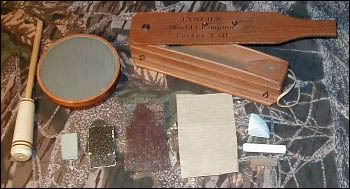


Friction Calls:
These calls are easy to learn even for a beginner and produce an authentic turkey sound.

Friction calls come in different models. The slate call is a wooden or plastic dish covered with slate, glass or aluminum. The sound is produced with a stick, called striker. Strikers are made of wood, plastic or fiberglass.

Another friction call that works very well and should be in every turkey hunters gadget box is the paddle box cal. This is the father of all turkey calls. The paddle box is made of wood. A hollow box, the sound chamber and attached at the open end is the paddle. By moving the paddle over the lips of the box the sound is produced.

There are more friction calls but the slate and box calls are the simplest and most effective to use and learn.

Mouth diaphragms:

These calls are placed in the mouth; exhaling air trough the mouth produces the sound. These calls are extremely difficult to learn. The positive side of these calls is that they free up the hands and no movement is needed to produce the sound. The mouth diaphragms are especially good for close work as an incoming turkey looks for movement.

Below I listed most of the common sounds a turkey makes.

Peeping
A turkey poult makes its first sound before it hatches.

Hatching Yelp
The hen answers the poults peeping with the Hatching Yelp. This helps bond the hen and the chicks together and helps the hen recognize each of her chicks.

Predator Alarm
When a predator is flying over or nearby the nest, the hen will utter a guttural, segmented call to warn the poults who will then duck under the hens body.

Plain Yelp
The yelp is a multi-purpose, rhythmic, 3 to 15 note series used to locate other turkeys during the day. The turkey yelp does follow a certain cadence but if you listen to wild turkeys call, they often have skips and half-beats in their series of calls and the number of yelps varies tremendously. Yelping also varies in volume and intensity. Some series of yelps stay about the same volume throughout while others start low, rise in volume and then tail off towards the end. Try and vary your yelping and you'll have much more success calling turkeys.

The yelp is sometimes referred to as the "love call' of the hen and is the one call every hunter should master. This call is used by both hens and gobblers. The gobbler yelp is slower and more deep throated than the hen.

Lost Yelp
A long series of yelps (10 to 20+) used by turkeys when they are lost and trying to call other turkeys to them. This can be used at random in the spring to attract long distance gobblers.

Tree Yelp
The tree yelp is a softer, shorter version of the standard yelp. Turkeys of both sexes tree yelp each morning. This call lets the other birds know that all is well after they wake up in the morning.

Cluck
A soft to loud staccato call used to locate and communicate with other turkeys. It basically is saying "I am here, where are you?". This call is used by both hens and gobblers. Turkeys cluck all of the time and it is by far their most used call.

Cutt
Cutting is a fast irregular series of clucks used by lost or lonely hens who are searching for other turkeys. It is an especially effective call for the hunter in the spring because hens use cutting to announce to gobblers they are ready to mate. They are usually loud and aggressive and last anywhere from 5 to 15 seconds in duration.

Cackle
This is a call most often used by hens when flying up or down from their roosts. It is a 5 to 20+ note call that is also used when flying over clear openings, water ,etc. A cackle is comprised of fast, irregular clucks and yelps. It is followed up with more subtle clucks when the turkey hits the ground. This call varies quite a bit and I've included several samples of fly down cackles.

Purr
A purr is a soft, fluttering or trilling call that is used by both hens and gobblers. It has several meanings and is most commonly thought of as a call used to communicate contentment and relaxation when the flock is together. It is also used by birds while they are feeding and in this case it is more of a "spacing" call where the birds purr to tell the other birds "I'm feeding here, give me some room." This is a very good call to coax the gobbler in the last few yards. There is often a cluck before and sometimes after a purr.

Aggravated or Fighting Purr
This is the loud aggressive purr emitted by gobblers and jakes as they posture to fight for dominance and the right to breed. Hens will also purr aggressively when they are upset and looking for a fight.

Get a couple of push-pull turkey calls and give the fighting purrs a try this spring. Turkeys love a good fight and you'll sometimes be stampeded by a group running up to get in on the fun. It is also a great call for the fall since turkeys are very actively fighting and establishing pecking orders during this season.

Gobble
Toms gobble for two main reasons - 1) To attract hens and 2) to proclaim their dominance over subordinate males. They will, however, shock gobble to just about any loud noise. The typical gobble lasts about 2-3 seconds. Most gobblers can control the intensity of their gobbling and generally older toms will have much deeper, full-throated gobbles. But don't let the gobbling fool you. Hens have been known to gobble and have a try at strutting also.

Spitting and Drumming
A two note pffffft, duuuuuuuummmmmm vocalization forced from a gobblers chest. He drums for the same reason he gobbles---to attract hens. He can drum softly or loudly depending on the location of the hens. On clear, calm days, drumming can be heard as far away as 100 yards. Simulating spitting and drumming is a very effective way to call in turkeys.

Since it is such a low-pitched sound it is very difficult to hear and/or record this sound. Once you've heard it though, you'll never forget it and I've often located turkeys but stopping and listening very carefully for the Spit 'n Drum.

Putt
The putt is a loud, sharp alarm call used when a turkey senses danger or when they see something that seems out of place. Essentially, it is a very loud cluck but with a different meaning. This is one you don't want to hear since it usually means you've been spotted and that the turkey is getting out of there in a hurry.

Kee-Kee
This is the 3-note whistle made by young turkeys when they are lost. It's a very good call for the fall to call in scattered turkeys. I've always found it interesting they call it a kee-kee when a more appropriate name would be kee-kee-kee.

Kee-Kee Run
This is the lost call of the young consisting of several whistles followed by 2 or three yelps like this kee-kee-kee-yelp-yelp. Use this in the spring sporadically with your other yelping. Occasionally, a jake will respond to the call with yelping of his own.

----------------------------------

To inquire or book a turkey calling seminar, or any of my other seminar topics, please Email me for more information and date availability.


I am a proud Pro-Staff member of Heirloom Custom Turkey Calls

Tags: , , , , , ,
Related Posts Plugin for WordPress, Blogger...